 Create Token
How to Add Liquidity and List a Token on a DEX
Add liquidity and list your token on a DEX: pump.fun, Raydium and Unilaunch compared on price control, pool setup costs and getting seen by traders.
Unilaunch Team6 min read

Key takeaways
- A token is listed on a DEX the moment it sits in a liquidity pool — there is no application to send.
- The amounts you deposit set the starting price, so the pool is where your launch is really decided.
- pump.fun starts coins on a bonding curve, and a regular pool only appears if the coin graduates to PumpSwap.
- On Raydium you build the pool by hand around a token minted elsewhere, and budget about 0.2 SOL for pool costs.
- Unilaunch creates the token and its pool in one flow, with your price, your swap fee and the pool setup in one fee.
Contents
You've created a token. It has a name, a supply and a logo — and nobody can buy it yet. To trade, a token needs a liquidity pool. To be found, that pool has to show up where traders look: DexScreener, trading terminals like Axiom, aggregators like Jupiter.
On Solana there are three common ways to get there, and they make very different trade-offs. You can launch on pump.fun and let a bonding curve do the work, build the pool yourself on Raydium, or create the token and its pool together on Unilaunch. This guide walks through each one: what you control, what the setup costs, and how your token gets seen.
What listing a token on a DEX actually means
A decentralized exchange has no listing committee and no application form. A token is "listed" the moment it sits in a liquidity pool — a smart contract holding your token on one side and a coin such as SOL on the other, which anyone can trade against. Buying takes tokens out of the pool and puts SOL in; selling does the reverse. If pools are new to you, our crypto basics guide explains them from scratch.
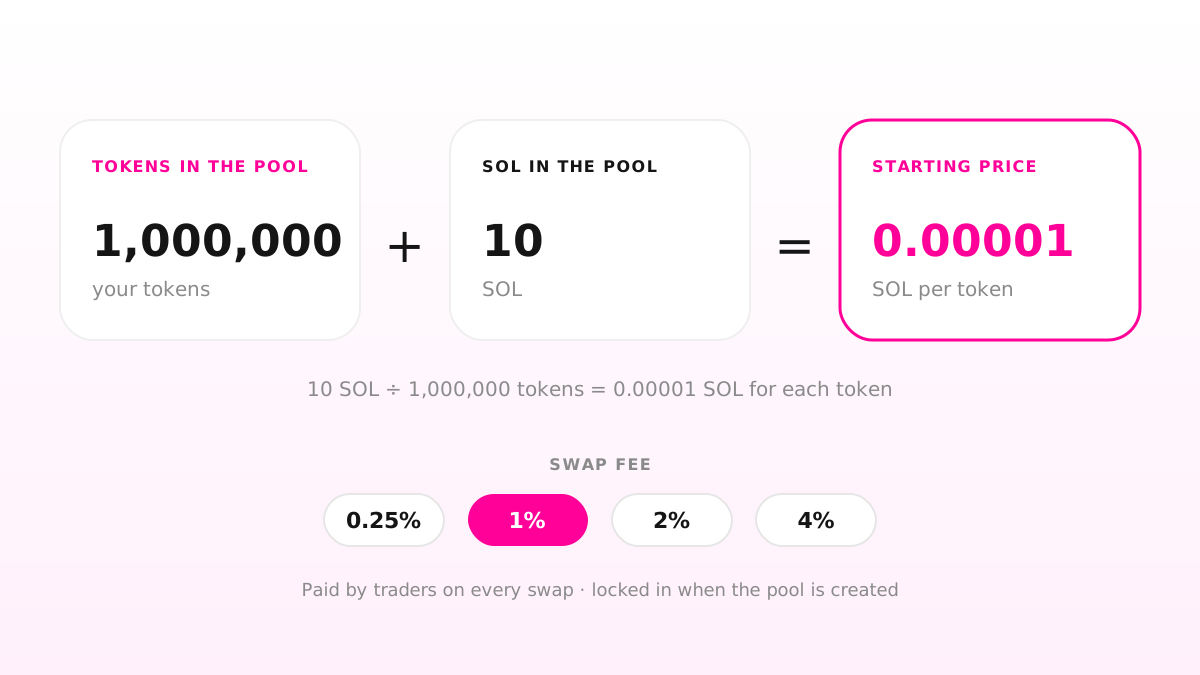
The pool also decides your starting price. Put 1,000,000 tokens and 10 SOL into a pool and each token starts at 0.00001 SOL. Put in half the SOL and the price halves. That ratio — and how much SOL stands behind it — is the most important number you choose at launch.
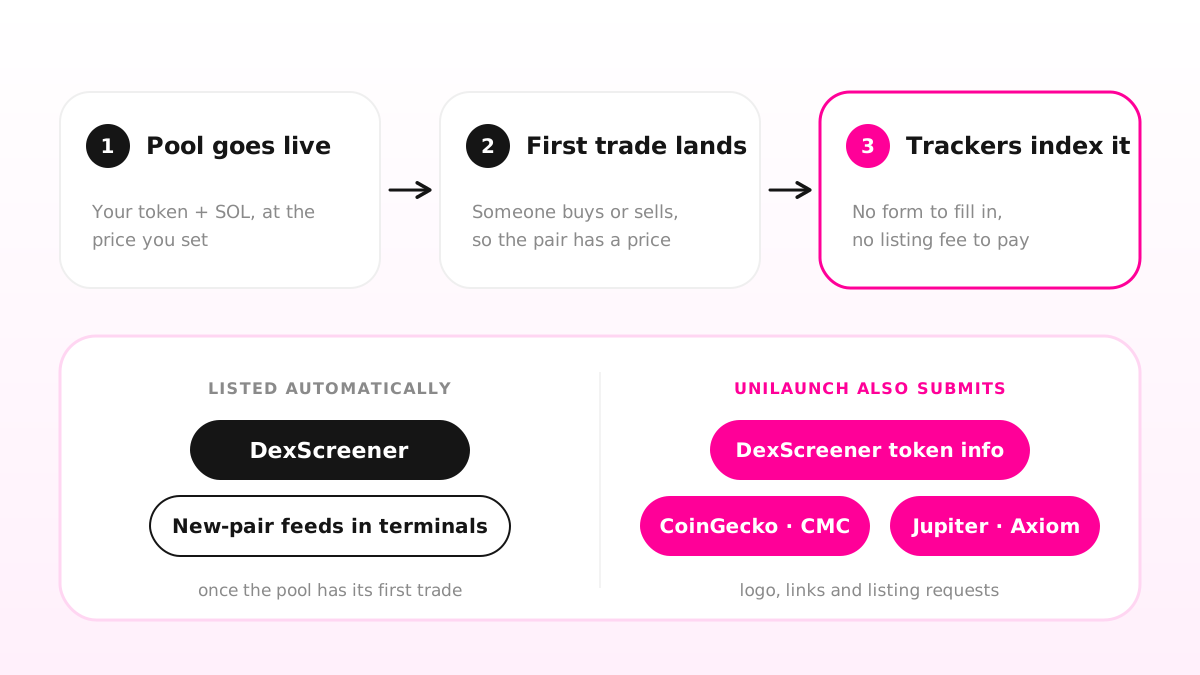
Being tradable and being discoverable are different things, though, and trackers do the discovering. DexScreener's own documentation says tokens are listed automatically once they are added to a liquidity pool and have at least one transaction — no application, no fee. Trading terminals such as Axiom work the same way, surfacing new tokens in their discovery feeds as they are created and traded.
What you can add on top is presentation and reach: a logo, description and links on DexScreener, and listing requests to CoinGecko, CoinMarketCap and Jupiter.
Route 1: pump.fun and the bonding curve
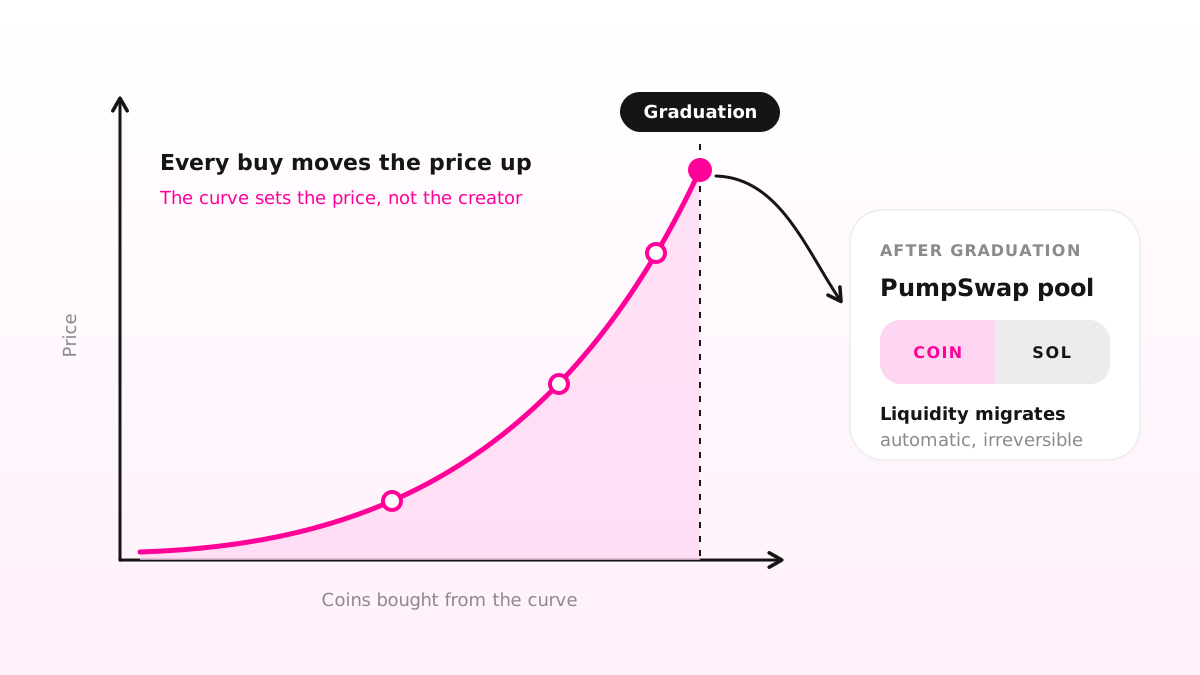
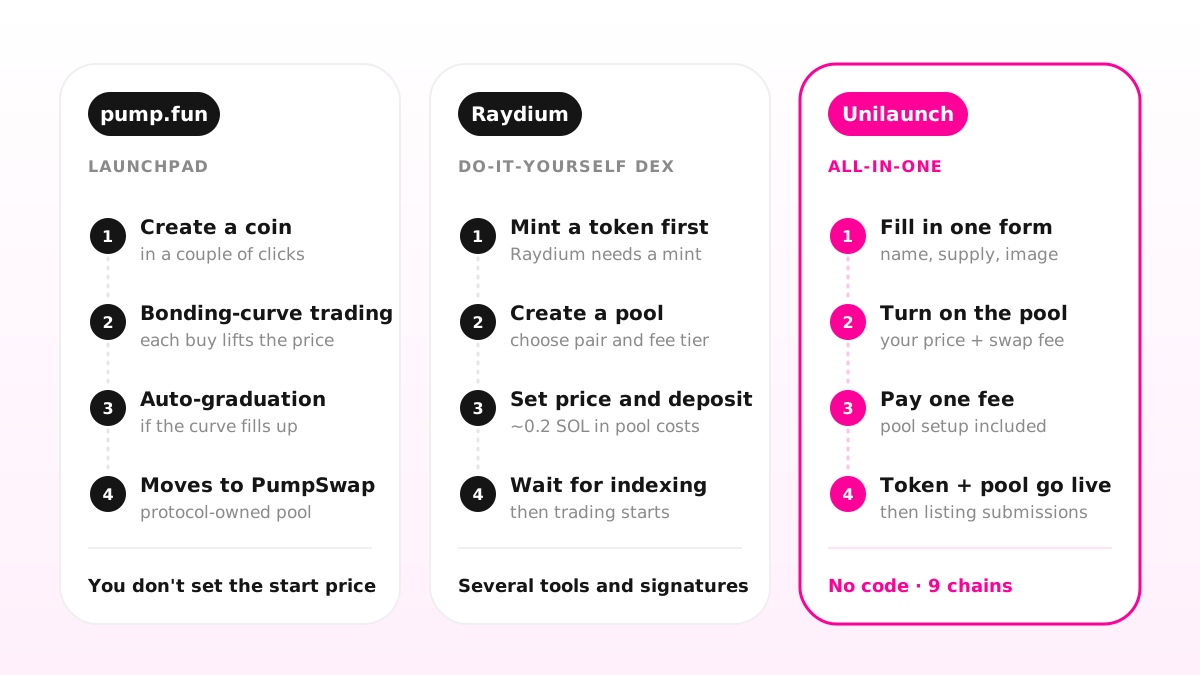
pump.fun lets anyone create a coin in a couple of clicks, but the coin doesn't start life in a liquidity pool. It starts on a bonding curve: a pricing formula run by the platform where, in pump.fun's own words, the price you pay is a pure function of how many tokens are in circulation. Every buy pushes the price up the curve; every sell pushes it back down.
When a coin's market cap on the curve reaches pump.fun's graduation threshold, the coin graduates. Its liquidity is migrated to PumpSwap, pump.fun's own exchange, where it becomes the coin's canonical pool. Graduation is automatic and irreversible.
Where pump.fun shines: it's quick to start, and its audience is already there — memecoin traders watch new pump.fun launches closely.
What you give up:
The starting price. The curve sets it, not you.
The pool's terms. You don't choose how much liquidity backs the coin or what traders pay per swap.
A pool of your own. A regular DEX pool only exists if enough buying carries the coin to graduation, and the migrated pool belongs to the protocol.
Route 2: Raydium, building the pool by hand
Raydium is a long-established Solana exchange, and creating a pool there gives you what pump.fun doesn't: your own price and your own liquidity. The catch is that every step is yours to do.
Raydium's pool flow expects a token that already exists — you paste in its mint address. So first you mint the token in another tool, set up its metadata and decide what to do with its mint and freeze authorities. Then, following Raydium's guide to creating a standard (CPMM) pool:
Choose the pool type: Standard AMM (CPMM).
Enter both tokens — yours, and the one you pair it with, usually SOL.
Pick a fee tier. Raydium lists 0.01%, 0.25% and 1% as common options.
Set the initial price and deposit both sides.
Review, confirm and sign.
Wait for the pool to be indexed.
Raydium's guide suggests budgeting about 0.2 SOL for pool creation rent, token-account creation and priority fees. That comes on top of the liquidity itself, and on top of whatever minting the token cost.
Where Raydium shines: full control, with nothing between you and the pool.
What you give up: time, and room for error. Minting, metadata, authorities and the pool live in different tools with separate signatures — and the price you enter in step 4 becomes the first price everyone trades at.
Route 3: Unilaunch, token and pool in one flow
Unilaunch puts both halves of the job — creating the token and giving it a market — into one form. No code, on Solana and eight other chains.
Step 1 — the token. Pick the network, then enter the name, symbol, decimals, supply, description and image.
Step 2 — the pool, and everything else. Switch on the Liquidity Pool option; enabling it costs nothing. Enter how many tokens go into the pool and how much SOL to pair them with — that ratio is your starting price. Then choose a swap fee of 0.25%, 1%, 2% or 4%. Traders pay it on every swap, and it can't be changed once the pool exists. In the same step you can revoke the mint, freeze and update authorities, add social links and spread the supply across up to 10 wallets.
Step 3 — one payment. The total is shown before you pay, and you send it from your own wallet. On Solana the base price is 0.3 SOL, each optional extra adds 0.1 SOL, and the pool's setup costs are included — there's no separate pool-creation bill to budget for. You bring the liquidity itself, and the network charges its usual transaction fee.
Once the payment is confirmed, the token appears in My Portfolio on the Liquidity Pool page — first as Pending, then with a link to Solscan when the launch resolves.
Because the pool exists from the start, there's no curve to fill before your token has a real market. As soon as the first trade lands, DexScreener can list the pair. And Unilaunch handles the listing groundwork traders look for: token info on DexScreener with your logo, description and links, listing requests to CoinGecko and CoinMarketCap, and submissions to Jupiter and Axiom.
pump.fun vs Raydium vs Unilaunch
| pump.fun | Raydium | Unilaunch | |
|---|---|---|---|
| Starting price | Set by the bonding curve | You set it | You set it |
| Regular pool | Only after graduation | Once you create it | From launch |
| Pool owned by | The protocol | You | You |
| Swap fee | Set by the platform | 0.01%, 0.25% or 1% (common tiers) | 0.25%, 1%, 2% or 4% |
| Creating the token | Built in | A separate tool | Built in |
| Pool setup costs | Taken at graduation | About 0.2 SOL, plus minting | Included in the Unilaunch fee |
| Listing submissions | — | — | DexScreener info, CoinGecko, CoinMarketCap, Jupiter, Axiom |
| Code or extra tools | None | Several tools and signatures | None, one form |
Which route fits your launch?
pump.fun suits a memecoin where you're happy for the crowd to fund the curve, and for the platform to set the price and create the pool at graduation.
Raydium suits a token that already exists, launched by someone comfortable running each step and tool by hand.
Unilaunch suits a launch that needs its own price and its own pool from the first minute, one up-front fee that covers the pool setup, a choice of nine chains, and help getting listed where traders look.
Before you add liquidity: a checklist
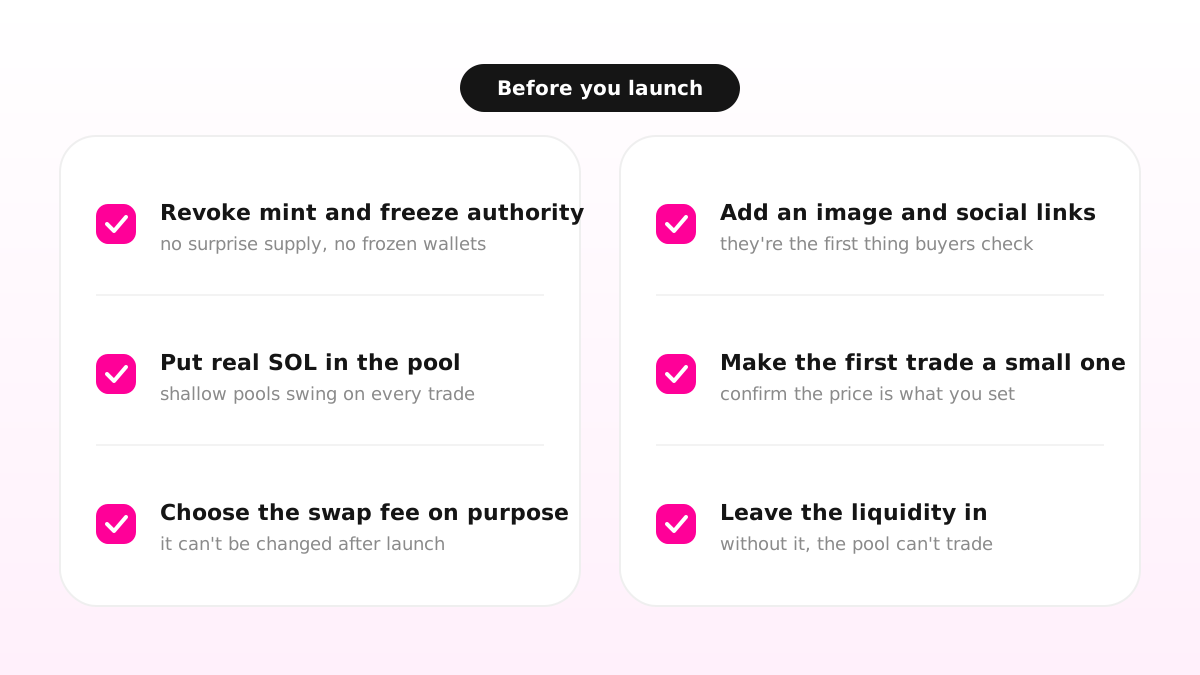
Revoke mint and freeze authority unless you need them. Buyers read it as a promise that no surprise supply appears and no wallet gets frozen.
Put meaningful SOL in the pool. A shallow pool moves sharply on every trade, which makes buyers nervous.
Choose the swap fee on purpose. A low fee is friendlier to traders, a high one earns more per swap — and it can't be changed later.
Add an image, links and a description. They're the first thing buyers and trackers check.
Make the first trade a small one. It confirms the price is what you intended, and gives trackers the transaction they need to list the pair.
Leave the liquidity in. If you withdraw all of it, nobody can trade through the pool until liquidity is added again.
Ready to launch? Create your token with its pool in one flow, or read the step-by-step guides in the Knowledge Base.
- #liquidity pools
- #DEX listing
- #pump.fun
- #Raydium
- #DexScreener
- #Solana
- #token launch