
 Create Token
Crypto Basics: Blockchains, Wallets, Tokens and Fees Explained
New to crypto? Learn how blockchains, wallets, seed phrases, tokens, gas fees and liquidity pools work — in plain language, before you launch a token.
Unilaunch Team10 min read
Key takeaways
- A blockchain is a shared public ledger — once a transaction is confirmed, nobody can reverse it.
- Your wallet holds keys, not coins. Whoever has your seed phrase controls your funds.
- Every chain has a native coin that pays its fees; tokens are assets built on top of a chain.
- A liquidity pool sets your token's price, and its depth decides how far each trade moves it.
- Revoking mint, freeze and update authority is permanent — and one of the strongest trust signals a token can send.
Contents
- What is a blockchain?
- What is a crypto wallet?
- Public keys, private keys and seed phrases
- Native coins vs. tokens
- Token standards: SPL, ERC-20 and BEP-20
- What is gas? Network fees explained
- Smart contracts
- What is a liquidity pool?
- Swap fees
- Slippage
- Supply, market cap and decimals
- Mint, freeze and update authority
- Block explorers
- Putting it all together
Crypto has a vocabulary problem. Before you can do anything useful — buy a coin, launch a token, fund a liquidity pool — you run into a wall of words everyone else seems to understand already: seed phrases, gas, mint authority, slippage.
This guide takes those words one at a time, roughly in the order you'll meet them. No prior knowledge assumed, no jargon left unexplained. By the end you'll know what is really happening when you connect a wallet, pay a network fee or create a token — and which mistakes are the expensive ones.
What is a blockchain?
A blockchain is a shared digital ledger: a record of who owns what, and who sent what to whom. What sets it apart from a bank's database is who keeps it. No single company is in charge. Instead, a large network of independent computers around the world — called nodes or validators — each hold a copy, and agree block by block on which transactions are valid and in what order they happened.
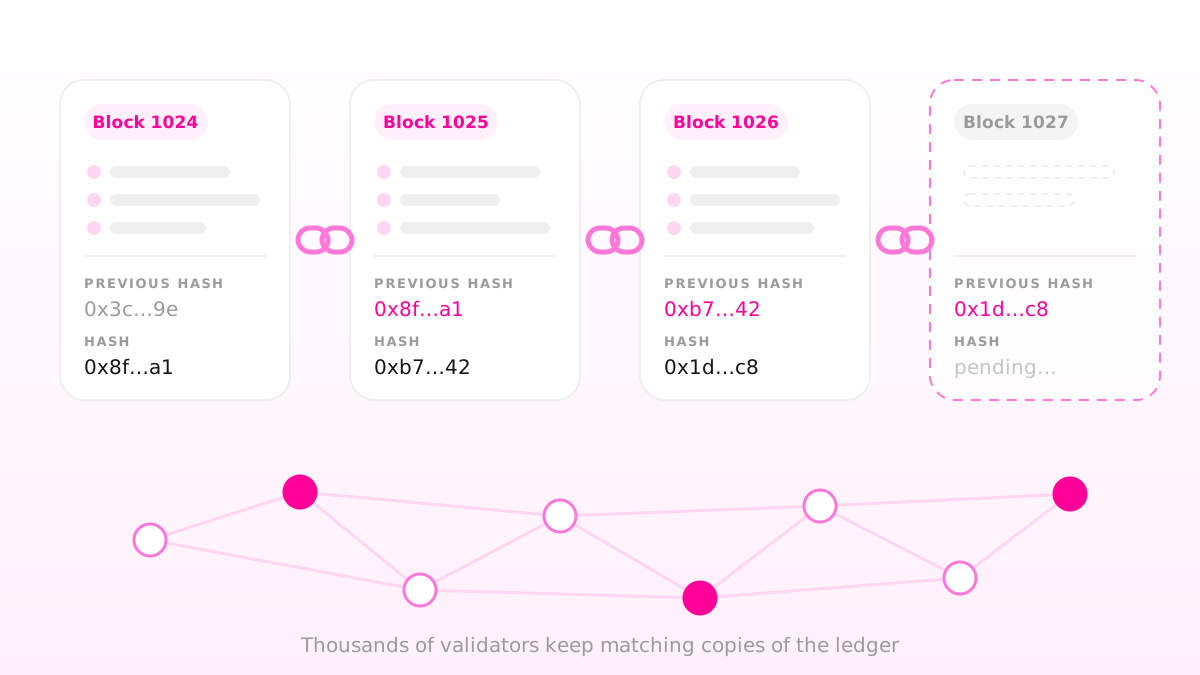
Once a transaction is confirmed and added to the chain, changing or removing it is practically impossible. That is why blockchain transactions are called irreversible. There is no support line that can undo a transfer the way a bank can sometimes reverse a payment — and no platform, Unilaunch included, can freeze, reverse or recover a transaction on your behalf.
It also helps to know there isn't just one blockchain. Solana, Ethereum, BNB Chain, Base and the rest are separate networks, each with its own native currency, its own speed and its own fees. Think of them as independent digital economies that don't talk to each other directly. Unilaunch lets you launch a token on nine of them today — Solana, Ethereum, Base, BNB Chain, Polygon, Arbitrum, Avalanche, Blast and Robinhood Chain — with Monad and Tempo marked as coming soon.
What is a crypto wallet?
A crypto wallet is the tool you use to hold, send and receive crypto, and to connect to blockchain apps like Unilaunch. The name is a little misleading, though. A wallet doesn't store coins the way a leather wallet stores cash — your funds live on the blockchain itself. What the wallet actually stores are your keys: the proof that you own those funds and are allowed to move them.
Wallets come in two kinds, and the difference matters:
Self-custodial wallets such as Phantom, Solflare, MetaMask and Trust Wallet keep the keys with you. Nobody can move your funds without your approval — and nobody can recover them for you if you lose access.
Custodial accounts, like a balance on a centralized exchange, keep the keys with the company. That is convenient, but you are trusting the company to look after your money properly.
Unilaunch works with self-custodial wallets: Phantom and Solflare on Solana, and MetaMask and Trust Wallet on the EVM chains (Ethereum, Base, BNB Chain, Polygon, Arbitrum, Avalanche, Blast and Robinhood Chain).
Public keys, private keys and seed phrases
Every wallet is built on a pair of keys, and they do very different jobs:
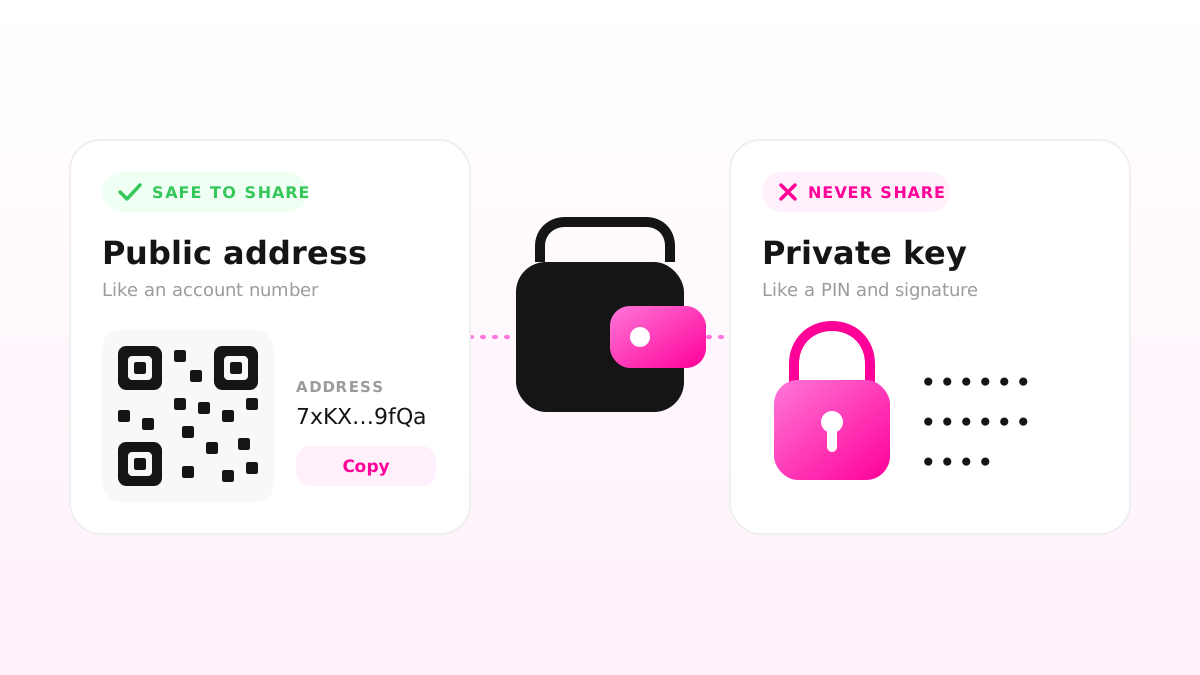
Your public key — your wallet address — works like a bank account number. You can share it freely: it's what people need to send you funds, and what an app like Unilaunch sees when you connect.
Your private key works like your PIN and your signature combined. It authorizes every transaction, and it must never be shared with anyone.
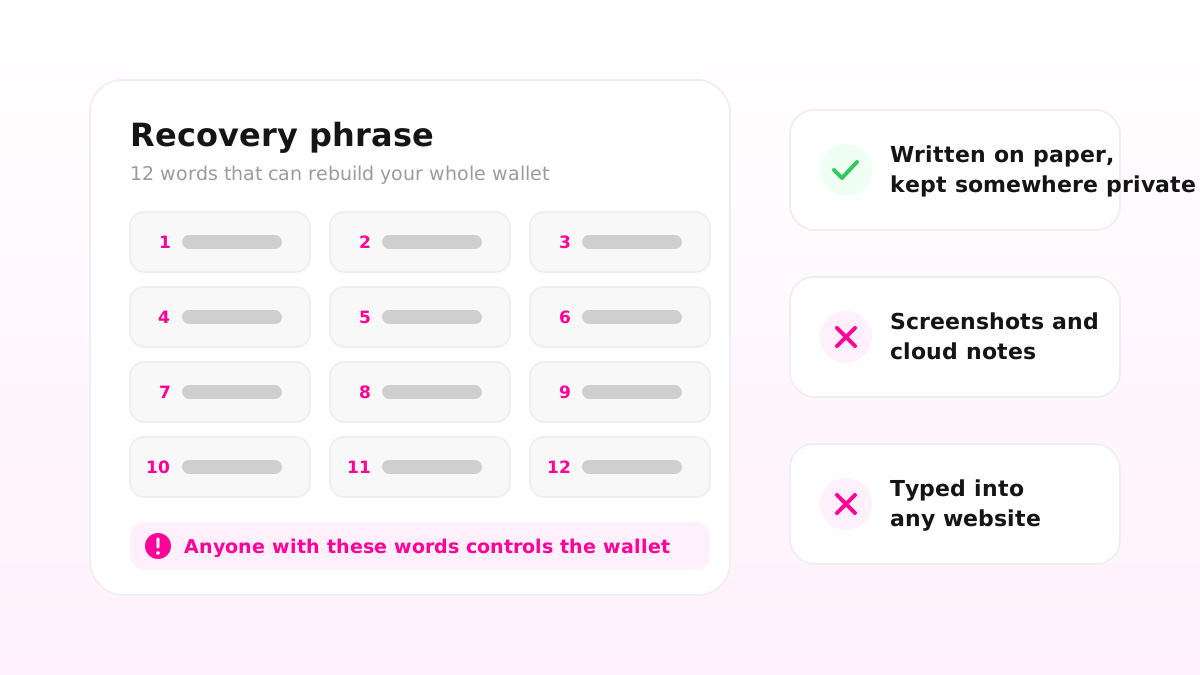
Most wallets never show you a raw private key. They give you a seed phrase instead (also called a recovery phrase): usually 12 or 24 ordinary words, generated when you create the wallet. Those words can rebuild every key in it, which makes them the most valuable thing you own in crypto.
A few rules worth living by:
Never type your seed phrase into a website. No tool on Unilaunch will ever ask for your seed phrase or a private key.
Never share it with "support staff", however official they look.
Write it on paper and keep it somewhere private and safe — not in a screenshot, a notes app or an email to yourself.
If a page unexpectedly asks for your seed phrase, close it immediately.
Native coins vs. tokens
Every blockchain has a native currency: the asset that pays for transactions on that chain and acts as its base unit. On the networks Unilaunch supports, those are:
SOL on Solana
ETH on Ethereum, and on the chains that settle in ether — Base, Arbitrum, Blast and Robinhood Chain
BNB on BNB Chain
POL on Polygon
AVAX on Avalanche
A token is something else: an asset created on top of an existing blockchain, following that chain's rules and standards, rather than being the chain's own currency. Stablecoins, governance tokens and meme coins are all tokens.
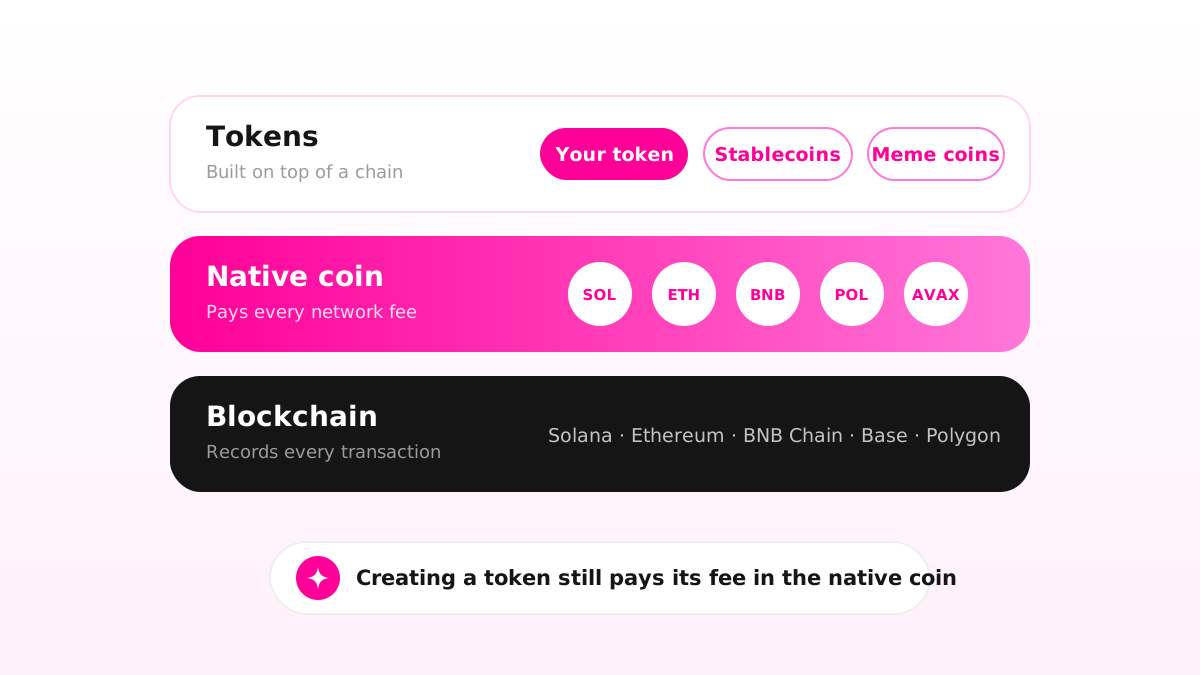
When you create a token with Unilaunch, this second kind of asset is what you are making. It lives on the chain you choose, but your wallet still needs some of that chain's native coin, because the transaction that creates the token pays its network fee in it.
Token standards: SPL, ERC-20 and BEP-20
A token standard is a shared technical format that a chain's wallets, exchanges and apps all agree to follow. It is the reason a brand-new token can appear in a wallet or trade on an exchange without anyone writing custom code for it. The common ones are:
SPL and Token-2022 on Solana
ERC-20 on Ethereum and other EVM-compatible chains
BEP-20 on BNB Chain
A token created through Unilaunch is built to whichever standard its chain uses, so it is recognized by wallets, visible on block explorers and tradable on compatible platforms from the moment it exists.
What is gas? Network fees explained
Gas is the fee paid to the validators who process and confirm your transaction — a small toll for the computing work of verifying it and recording it permanently. It is always paid in the native currency of the chain you're using.
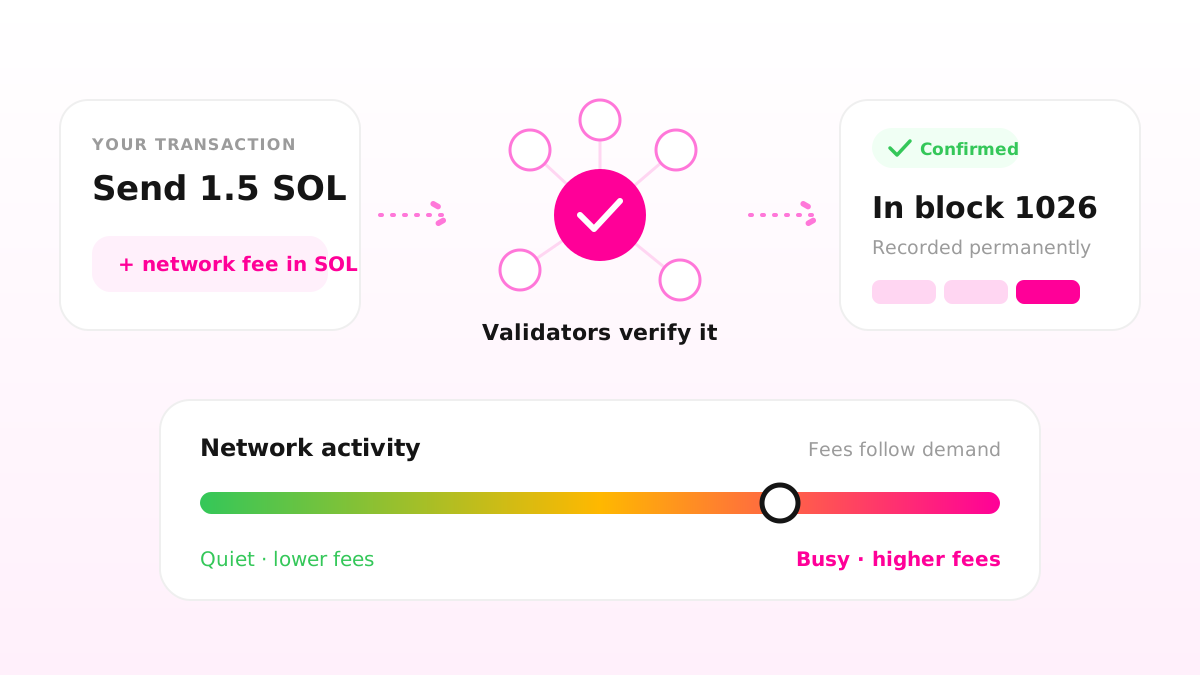
Gas isn't a fixed price. It moves with demand: when a lot of people are transacting at once, fees climb, and when the network is quiet they fall.
It is also separate from any fee an app charges. On Unilaunch, each feature carries a Tool Fee, quoted in the native currency of the chain you picked; the interface adds it up for you before you pay, and the network fee comes on top.
Smart contracts
A smart contract is a program that lives on a blockchain and runs automatically, according to rules written into its code — no person or company has to carry it out by hand. Creating a token, adding liquidity or using almost any tool on Unilaunch means interacting with smart contracts behind the scenes: some written by Unilaunch, others belonging to third-party protocols your transaction touches, such as a liquidity platform.
Smart contracts can be reviewed and tested, but like any software they can still contain bugs or behave unexpectedly. It is one more reason to only transact amounts you are comfortable with, and to take security seriously.
What is a liquidity pool?
For people to buy and sell a token freely, it usually needs a liquidity pool: a smart contract holding reserves of two assets that anyone can trade between. When someone buys your token, they add the paired asset to the pool and take some of your token out — shifting the balance, and with it the price. A sale does the opposite.
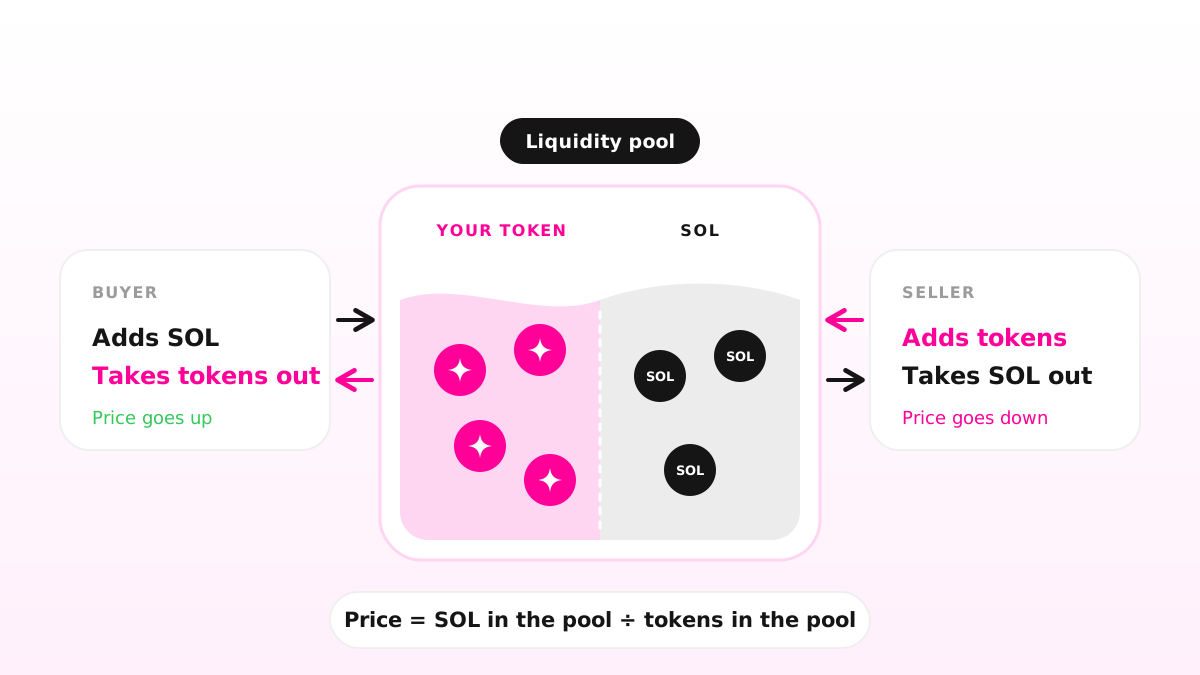
How far a trade moves the price depends on the size of the pool. A deep pool, with a lot of value locked in it, keeps pricing relatively stable. A shallow pool can swing dramatically on even a modest trade.
On Unilaunch the pool is always paired with the native coin of the chain you launched on — your token against SOL on Solana, against ETH on Base, against POL on Polygon, and so on. You set it up while creating the token: how many tokens go in, how much of the native coin to pair them with, and the swap fee traders will pay. After launch, the Liquidity Pool page is where you top the pool up or withdraw from it.
Swap fees
The swap fee is what traders pay on every trade against your pool, split between you and the pool itself. Unilaunch lets you pick one of four rates — 0.25%, 1%, 2% or 4% — while you configure the pool.
It's worth a moment's thought, because the fee is written in when the pool is created and can't be changed afterwards. A low fee is friendlier to traders; a high one earns more per trade but can discourage trading.
Slippage
Slippage is the gap between the price you expected when you submitted a trade and the price you actually got once it confirmed. It happens because a pool's price can move in the moments between submitting a transaction and its settling — especially in fast markets, or in pools with little liquidity.
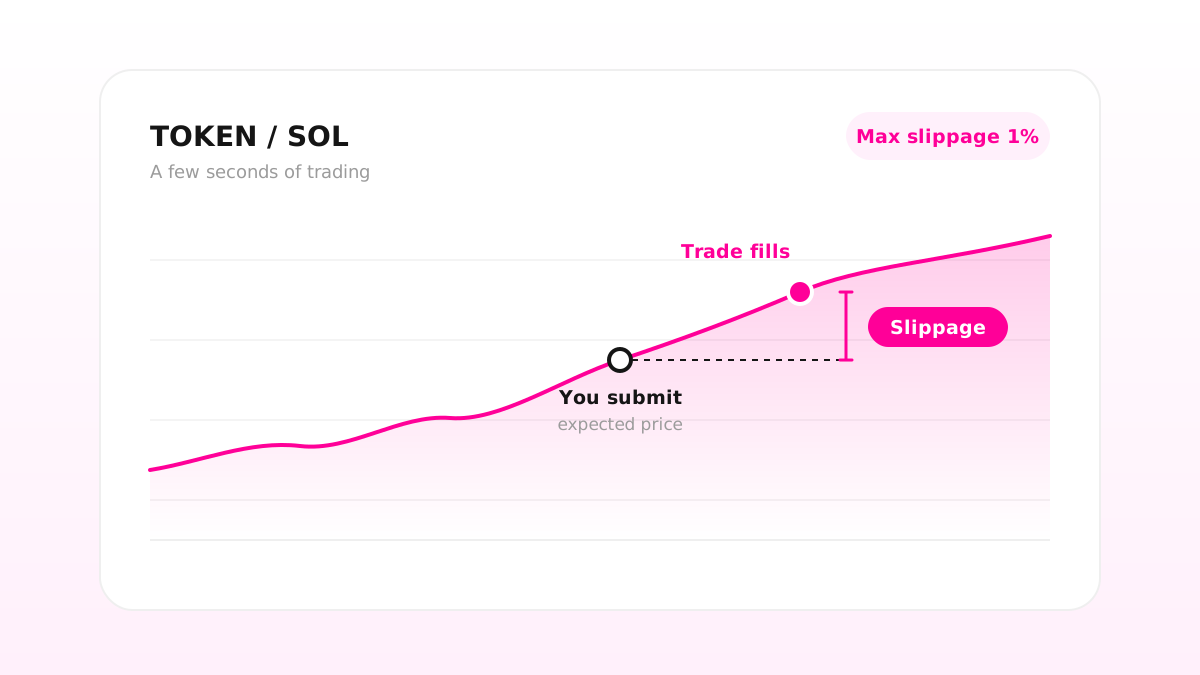
Unilaunch's own tools don't ask you to set a slippage tolerance: creating a token and funding a pool use fixed amounts you enter yourself. Slippage starts to matter once your token is trading. Most wallets and exchange interfaces let the trader set a maximum tolerance, so a transaction fails rather than filling at a price far worse than expected.
Supply, market cap and decimals
Three numbers describe how much of a token exists and what it's worth:
Total supply is the number of units that exist — or that can ever exist, once the mint authority has been revoked.
Market capitalization is usually the token's current price multiplied by its circulating supply. It's a rough measure of total value, and it can be very misleading for tokens with little liquidity.
Decimals decide how finely a token can be divided, the way a dollar divides into cents. Unilaunch's creation form takes a single digit from 0 to 9, and a token with 9 decimals divides into billionths.
Mint, freeze and update authority
On Solana, every token is created with three authorities — special permissions held by whoever created it:
Mint authority lets its holder create more units later, increasing the supply.
Freeze authority lets its holder freeze specific token accounts, so they can't send or receive the token.
Update authority lets its holder change the token's metadata — its name, image and links — after launch.
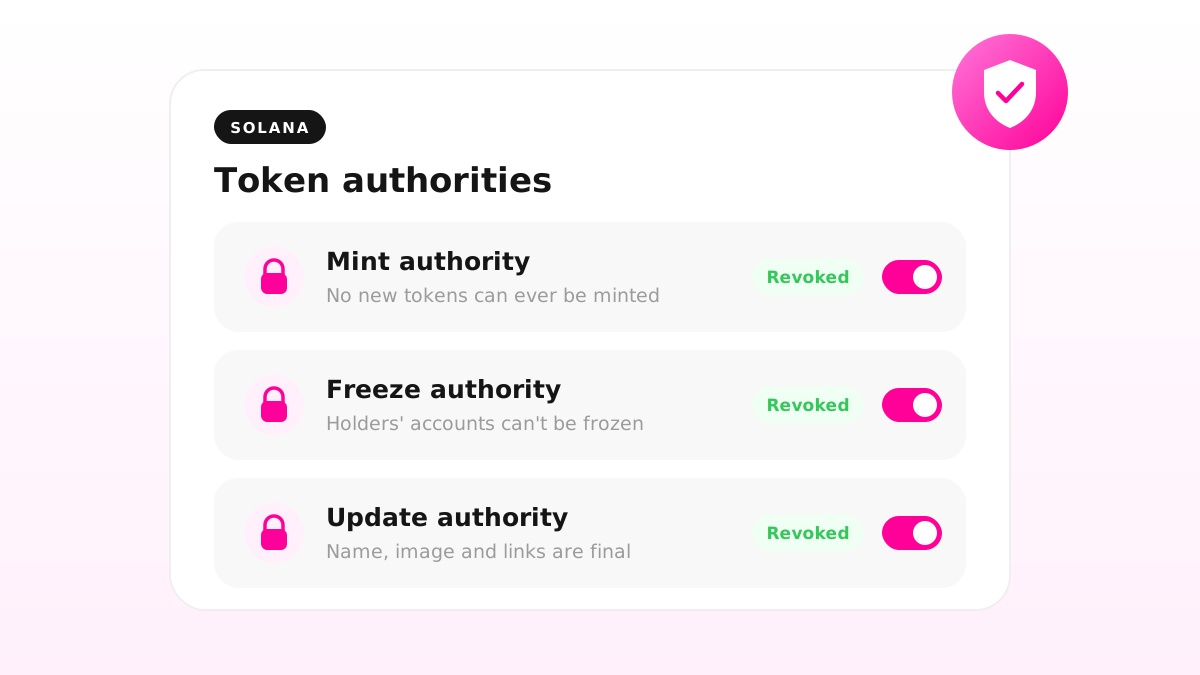
You can permanently give up — revoke — any of them while configuring your token. Many communities see that as a sign of trustworthiness: the supply can never be quietly inflated, accounts can never be frozen, and the metadata can never be rewritten. Revoking is final and can't be undone.
The EVM chains work the other way round. Instead of revoking authorities, you choose which capabilities the contract has — Burnable, Mintable or Pausable — and whatever you leave switched off simply isn't written into the contract. Those choices are final too, since capabilities can't be added later.
Block explorers
A block explorer is a website for searching the public data on a blockchain: transactions, wallet addresses, token contracts and more. Because blockchains are public by design, anyone can look up a token's contract, see every transaction it has been part of, and check details like its total supply or whether its mint and freeze authorities have been revoked.
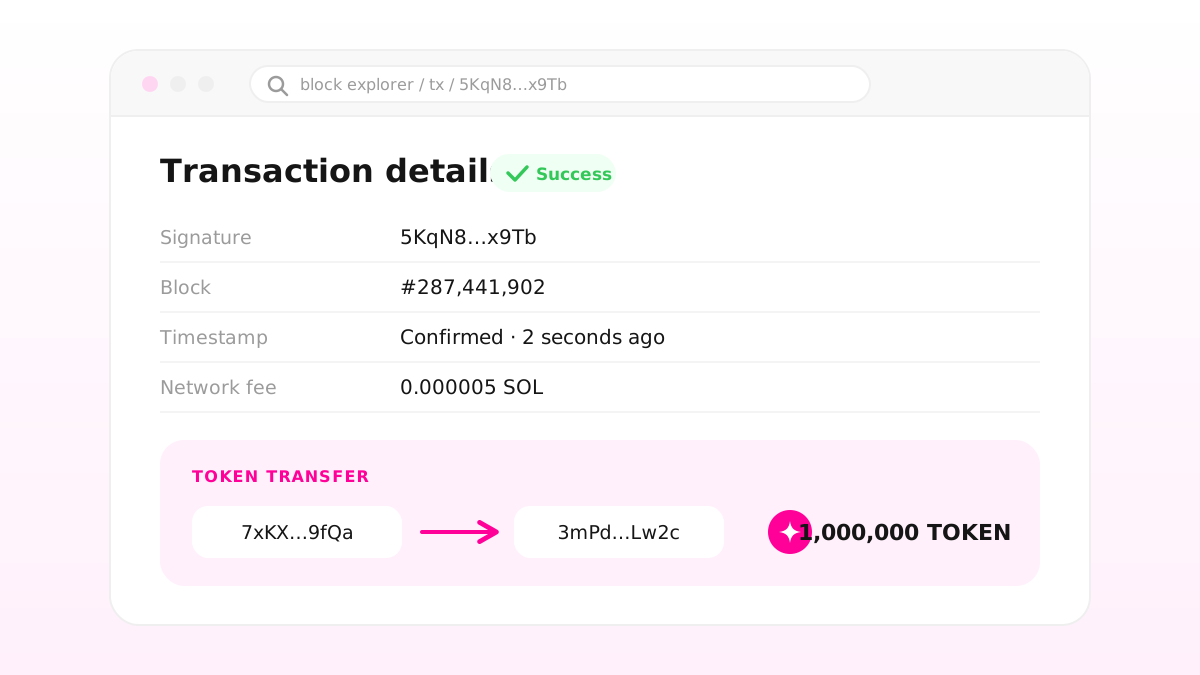
Once your launch goes through, Unilaunch links straight to your token on the explorer for its chain: Solscan for Solana, Etherscan for Ethereum, and BaseScan, BscScan, PolygonScan, Arbiscan, Snowtrace or Blastscan for the others. Robinhood Chain is the one exception — it has no public explorer yet, so there is no link to follow there.
Putting it all together
Every transaction you make is permanent, every fee is real, and every wallet you connect is entirely under your own control — and your own responsibility. Understanding the basics above is one of the best things you can do before creating your first token or funding your first pool.
When you're ready to put it into practice:
Follow the Getting Started guide for a step-by-step walkthrough of a first launch.
Go straight to Create Token and start building.
Browse the Knowledge Base for FAQs and more guides.
If anything here is unclear, you can open a support ticket or write to support@unilaunch.top.
- #blockchain
- #wallets
- #seed phrase
- #tokens
- #gas fees
- #liquidity pools